
The universal wisdom about starting the war on Ukraine lies in Western narrative pointing on Russia reckless behavior that had already been accepted worldwide. According to this narrative, president Putin is an insatiable expansionist who lacks any plausible national security motivations for his decisions. The narrative portrays Mr. Putin as a new Hitler living in the imperial past driven by an innate Russian militarism, and the Russian aggression on Ukraine as a first step akin to the Nazi aggression of World War II. His goal is to regain control over eastern European countries and conquer western states to rebuild Great Russia Imperium.
And , so crucial question comes into the focus: Is the Western narrative about Ukraine war correct? After deep study of facts, examine historical evidence and review international relations between Russia and so called collective West leading by USA and NATO for last three decades, it becomes clear that the Western narrative is incorrect. In crucial respects, it is the opposite of truth. The source material argues, that real cause of the war lies not in an unbridled expansionism of president Putin, or in paranoid delusions of military planners in the Kremlin, but in a 30- year history of Western provocations, directed at Russia. This began during the dissolution of the Soviet Union and continued through violent conflict escalation spiral started with Euromaidan and Maidan massacre, escalated to the Russian annexation of Crimea and the civil war and Russian intervention in Donbas. The provocations placed Russia in untenable situation, for which military intervention known as a “Special Military Operation” seemed to Russian president and his military staff, is the only workable solution. There is no evidence from before 2022 that president Putin wants to conquer all Ukraine and incorporate to Russia, or attack any other European state. There is no said or written evidence to support that claim. Putin never said that conquer Ukraine was desirable or feasible goal, and intend to pursue that goal. The opponents often argue that he said that Ukraine is an artificial state and Russians and Ukrainians is a one people. In famous article from July 12th 2021, he said: “You established state of your own and you are welcome. Regarding how Russia should treat Ukraine it is only one answer: with respect, and what Ukraine would be is up to citizens to decide.” On February 21st 2022 Putin speech, three days before military operation starts he said: “The new Russia accepts the new geopolitical reality which took place after dissolution of USSR.” In his famous quote reflecting the Soviet Union He said: “Whoever does not miss the Soviet Union has no heart. Whoever wants it back has no brain.” This only indicates critical thinking and rationality. During the past three decades, the United States, sometimes alone, sometimes with its European allies, undertook several key actions as follow:
1– The most significant was the expansion of NATO over a thousand miles eastward, pressing it toward Russia’s borders, in disregard of assurance previously given to Moscow. According to an analysis by the Security Archive of George Washington University where declassified documents are posted, a cascade of assurances were given about Soviet Union security by Western leaders to Gorbachev and other Soviet officials throughout the process of German unifications in 1990 and 1991. The Archive compiled these declassified documents for a panel discussion on November 10th, 2017 at the annual conference of the Association for Slavic, East European and Eurasian Studies /ASEES/ in Chicago under the title “Who Promised What on NATO Expansion.” The major events and meetings in declassified documents took place as follow:
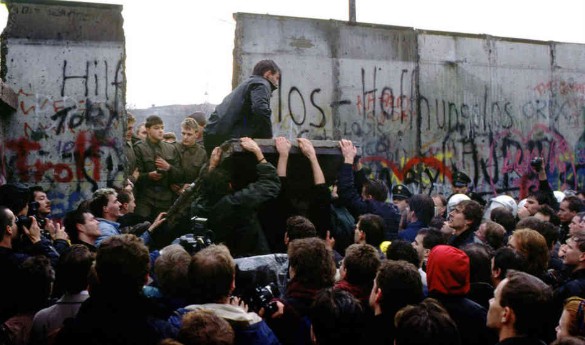
A– On November 9th, 1989 fall of the Berlin Wall transformed concerns about Germany’s future from hypothetical worries into political realities. A path to reunite Germany without weakening West Germany’s relationship to NATO or risking conflict with the Soviet Union only appeared at the start of 1990, as the Soviet treat to use force declined. By late January 1990, the collapse of communist authority in Eastern Europe owning to the revolutions of 1989 led U.S. policymakers to conclude that Soviet forces “will be fast pushed out” of the region. Affords to establish a concrete framework for negotiations for reunification Germany began.
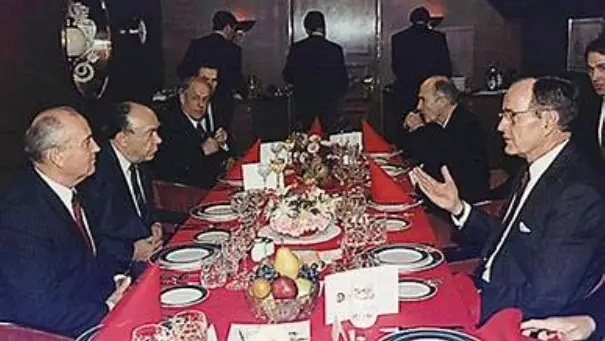
B– On December 2nd-3rd 1989, during Malta Summit perceived as a revisions of the Yalta agreements from 1945 and also marked as an end of the Cold War, President George H.W. Bush had assured Gorbachev that the U.S. would not take advantage of the revolutions in Eastern Europe to harm Soviet interests.
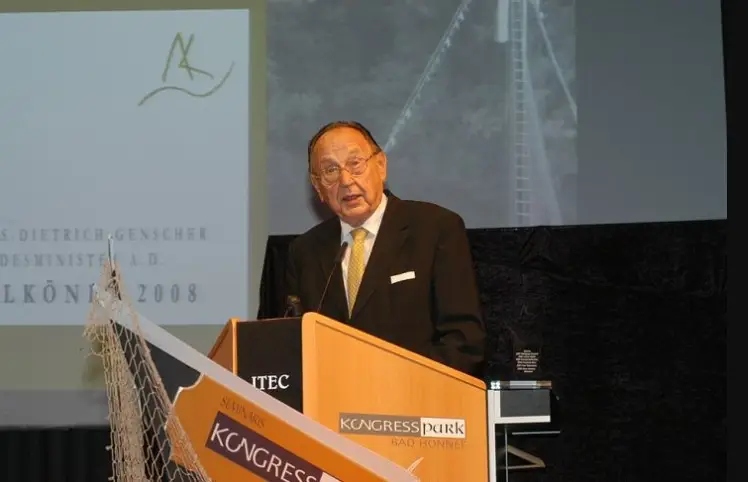
C– On January 31st, 1990, West Germany Foreign Minister Hans-Dietrich Genscher made public speech at Tutzing, on Germany unifications. Genscher made clear that ” the changes in Eastern Europe and the German unifications process must not lead to impairment of Soviet security interests. Therefore, NATO should rule out an expansion of its territory toward east, i.e. moving it closer to Soviet borders.”
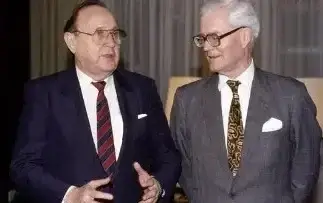
D – On February 6th 1990 conversation between British Foreign minister Douglas Hurd’s and West Germany Foreign Minister Genscher memorandum contains remarkable specificity on the issue of future NATO membership for the Central Europeans. The memorandum specifically quotes Genscher saying: “that when he talked about not wanting to extent NATO that applied to other states beside the GDR. The Russians must have some assurance that if, for example, the Polish Government left the Warsaw Pact one day, and they would not join NATO the next.“
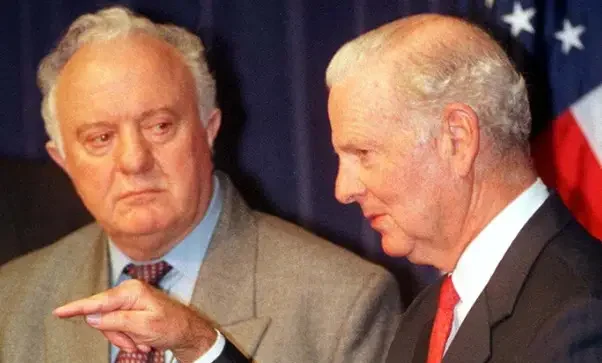
E – On February 7th, during discussing America’s preferences for Germany unifications within NATO between U.S. Secretary James Baker and Russian foreign minister Eduard Shevardnadze, Baker said that the U.S. is seeking a reunified Germany that would remain “firmly anchored” in NATO, while promising “ironclad guaranties that NATO’s jurisdiction or forces would not move eastward” and at his note added asterisks and an exclamation part: “End result: Unified Germany anchored in a*changed /polit./ NATO- whose juris. Would not move* eastward!”
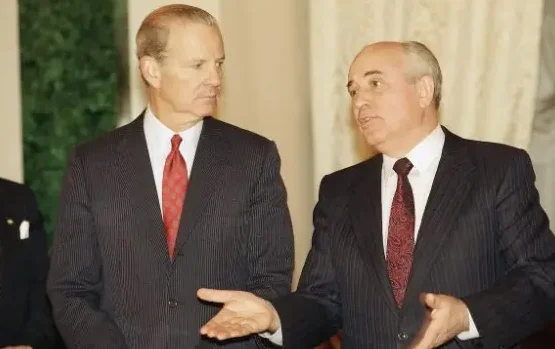
F – On February 9th, 1990 on meeting in Moscow, Baker agreed with Gorbachev statement that NATO expansion is unacceptable and promised Gorbachev six times that if the Soviet Union would withdraw their troops and allow German reunifications under America’s NATO alliance they would not expand it, “not one inch eastward.” Baker assured also Gorbachev that “neither the President nor I intent to extract any unilateral advantages from the process that are taking place,” and that the Americans understood that “not only for the Soviet Union but for other Europeans countries as well it is important to have guaranties that if the U.S. keeps its presence in Germany within framework of NATO, not a inch NATO presents military will spread in an eastern direction”. At the press conference later that day, the secretary Baker confirmed they agreed “there should be no extension of NATO forces eastward in order to assuage the security concerns of those of the East Germany.”
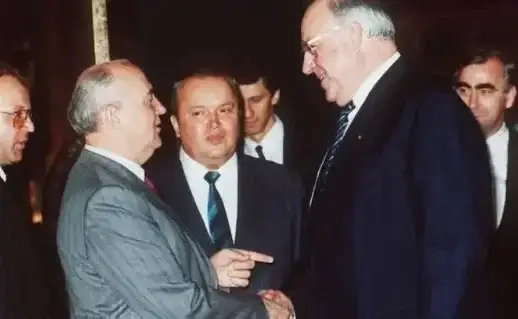
G – On February 10th 1990, meeting in Moscow between Kohl and Gorbachev the West Germany leader well understood a key Soviet bottom line, and assured Gorbachev: “We believe that NATO should not expand the sphere of its activity.” Kohl achieved Soviet assent in principal to German unifications in NATO, as long as NATO did not expand to the east, /The formal deal was signed in September 1990/.
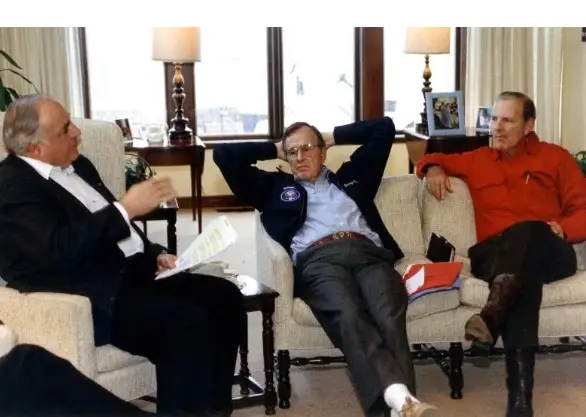
H – On February 24-25th 1990, meeting at Camp David with West Germany leadership President Bush observed: “The Soviets are not in position to dictate Germany’s relationship with NATO. What worries me is talk that Germany must not stay in NATO. To hell with that! We prevailed and they didn’t. We can’t let the Soviets clutch victory from the jaws of defeat.” Continuing to Kohl:“ “We are going to win the game, but we must be clever while we are doing this.”
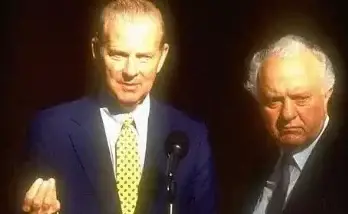
I – On May 4th, 1990 meeting in Bonn, Secretary Baker presented to Eduard Shevardnadze the needs to adopt NATO, politically and military, and to develop CSCE /Commission on Security and Cooperation in Europe/ to reassure Shevardnadze that the process would not yield winners and losers. Instead it would produce a new legitimate European structure – one that would be inclusive not exclusive. Baker repeated this directly to Gorbachev in Moscow on May 18th, 1990 giving Gorbachev his “nine points” which included the transformation of NATO, strengthening European structures, keeping Germany non-nuclear, and taking Soviet security interest into account.
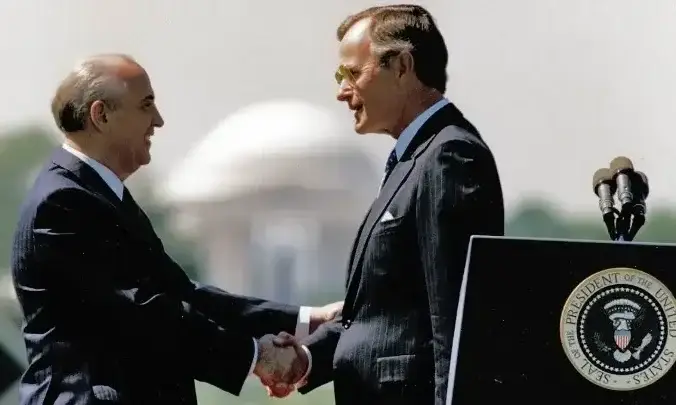
J – On May 31st, 1990 on Washington summit, Bush assured Gorbachev that Germany in NATO would never be directed at the USSR: “Believe me, we are not pushing Germany towards unifications, and it is not us who determines the pace of this process. And of course, we have no intentions, even in our thoughts, to harm the Soviet Union in any fashion.”
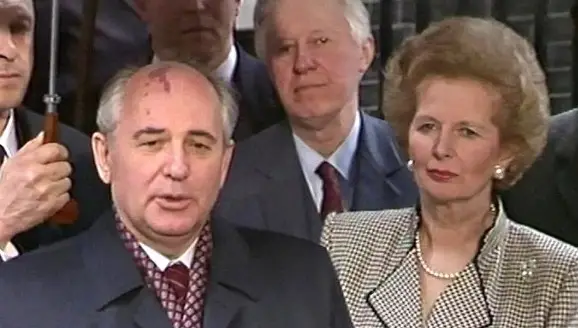
K – On June 8th, 1990 in London, Margaret Thatcher said to Gorbachev: “We must find the ways to give Soviet Union confidence that its security would be assured…….Commission on Security and Cooperation in Europe /CSCE/ could be an umbrella for all this, as well as being the forum which brought the Soviet Union fully into discussion about future of Europe.” Gorbachev also talks about the need for NATO and the Warsaw Pact to move closer together, from confrontation to cooperation to build a new Europe. “We must mold European structure so that they helped us to find the common European home. Neither side must be afraid of unorthodox solutions”. He continued: “if the process become one-sided, there could be very difficult situation and the Soviet Union would feel its security in jeopardy,” Thatcher responded firmly that it was nobody’s interest to put Soviet security in jeopardy: “We must find ways to give the Soviet Union confidence that its security would be assured.:
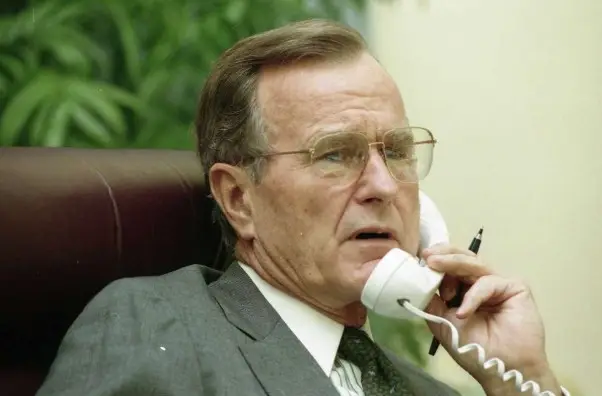
L – On July 17th, 1990 phone call Bush explained to Gorbachev: “So what we tried to do was to take account of concerns expressed to me and others, and we did it in the following ways: by our joint declaration on non-aggression; in our invitation to you to come to NATO; in our agreement to open NATO to regular diplomatic contact with your government and those of the Eastern Europeans countries; and our offer on assurances on the future size of the armed forces of united Germany. We also fundamentally changed our military approach on conventional and nuclear forces. We conveyed the idea of an expanded, stronger CSCE with new institutions in which the USSR can share and be part of the new Europe.”
The documents show that Gorbachev agreed to Germany unification in NATO as the result of this cascade of assurances, that the future of the Soviet Union depended on its integration into Europe, for which Germany would be the decisive actor. He and most of his allies believed that some version of the “Common European Home” was still possible and would develop alongside the transformation of NATO to lead to a more inclusive and integrated European space, and that the post-Cold War settlement would take account of the Soviet Security interest. But inside the U.S. government, a different discussion continued: a debate about relation between NATO and Eastern Europe. Opinions differed but the suggestion from the Defense Department as of October 25th 1990 was to leave “the door ajar” for East European membership in NATO. The view of the State Department was that NATO expansion was not on the agenda during negotiations, because it was not in the interest of the U.S. to organize “anti-Soviet coalition” that extended to the Soviet borders, not least because ” it might reverse the positive treads in the Soviet Union.”
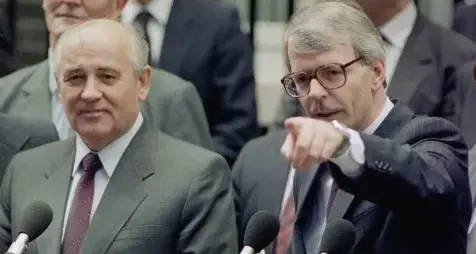
M – As late as March 1990, according to the diary of the British ambassador in Moscow, British P.M. John Major personally assured Gorbachev, “We are not talking about the strengthening of NATO.” Subsequently when Soviet defense minister Dimitri Yazov asked John Major about European leaders’ interest in NATO membership, the British leader responded, “Nothing of the sort will happen.”
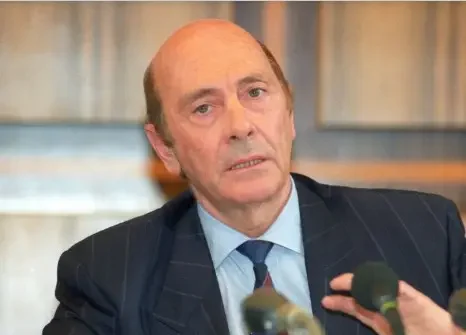
N – On July 1991, when Russian Supreme Soviet Deputies came to Brussels to meet with NATO secretary-general Manfred Werner he told Russians: ” We should not allow the isolation of the USSR from the European community.”
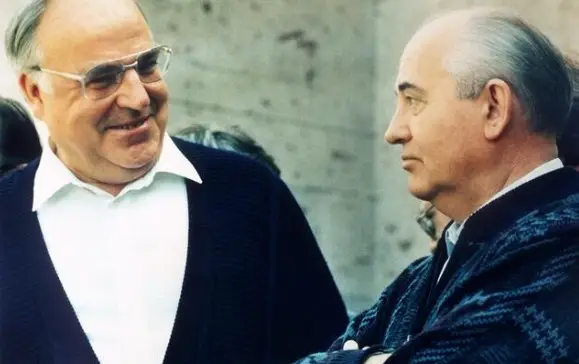
O – In mid- July 1990, during meetings with Kohl in Moscow, Gorbachev agreed that reunified Germany would remain in NATO, that NATO security guarantees would cover the former East Germany, and that Soviet troops would withdraw quickly from East Germany. In return, Kohl offered loans to the Soviet Union and pledged that “neither NATO nuclear weapons nor German troops would move into former East Germany.” On October 3rd, 1990 East and West Germany officially reunited.
The only reason Gorbachev and the Soviets were so cooperative on withdraw from Germany and the reunification, was the assurances given by Bush, Baker, Gates, Kohl, Genscher, Thatcher, Major and others that they would not take advantage of the situation, especially by expanding their military alliance eastward. And the U.S. administration was deliberately deceitful in leading them to believe it. Evidence indicates that U.S. policymakers suggested to Soviet Union limits on NATO presents in Europe after Cold War, while privately planning for an American-dominated system and taking steps that would attain this objective.
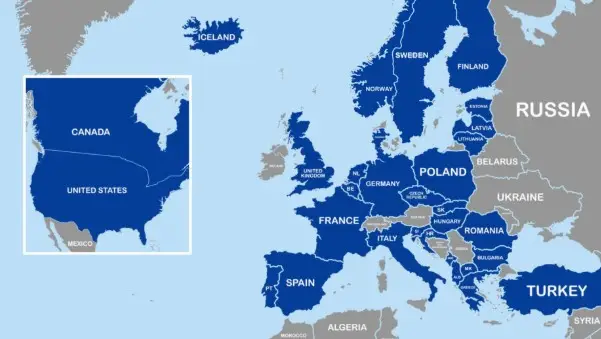
NATO EXPANTION
1999 – Poland, Hungary, Czech Republic
2004 – Bulgaria, Estonia, Latvia, Lithuania, Romania, Slovakia, Slovenia
2008 – At a NATO Summit in Bucharest, NATO announced so called “Bucharest Declaration” that it intended to admit Ukraine and Georgia as a members. Both country borders on Russia
2009 – Albania, Croatia
2017 – Montenegro
2023 Macedonia
2024 Finland, Sweden
2 – Withdrawn unilaterally from the Antiballistic Missile Treaty and placed antiballistic launch system in newly joined countries. The launchers can also accommodate and fire offensive nuclear weapons at Russia, such as nuclear tipped Tomahawk cruise missiles.
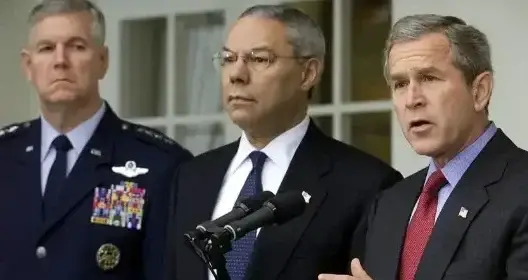
A – Negotiated between United States and Soviet Union as part of the Strategic Arms Limitation Talks, the Anti-Ballistic Missile Treaty /ABM/ was signed on May 26th, 1972, and entered into force on October 3rd, 1972. The treaty barred Washington and Moscow from deploying nationwide defenses against strategic ballistic missiles. The two sides asserted that effective limits on anti-missile systems would be a “substantial factor in curbing the race in strategic offensive arms”. On June 13th 2002, United States unilaterally withdrew from the treaty and soon President Bush added plans to put defensive missiles in Romania and Poland and radars in Czech Republic. U.S. administration claimed that those were to protect Poland from ballistic missiles attacks from Iran.
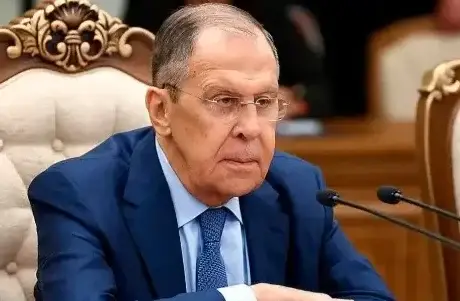
B – Russian Foreign Minister Sergey Lavrov mocked these assurances, arguing that the locations in Poland and Czech Republic were better suited for intercepting Russian International Ballistic Missile /ICBM/ than against hypothetical Iranian ballistic missiles. He claimed that if this was really about protecting Europe from Iran “the proposed MD sites should be located in Turkey, France and Italy”.
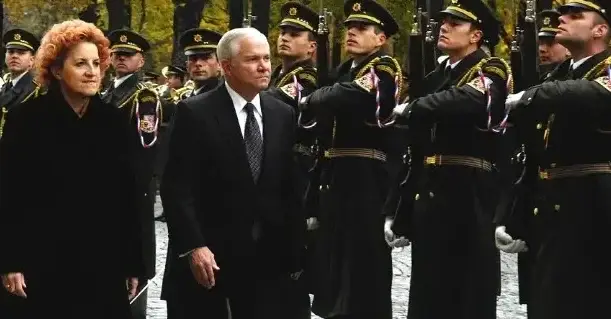
C – In October 2007 Secretary of Defense Robert Gates came up with proposal “to keep the Czech radar inactive and leave the Polish silos without interceptors until the U.S. and Russia agreed that an Iranian missile capacity had materialized, while having a permanent U.S. and Russian presents at both sites.” When they finally got the proposal in writing, the part about the Russian presents at the sites had been cut and assessment of the Iranian threat was now to be left to U.S. alone to decide.
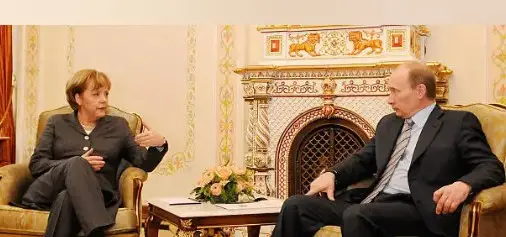
D – When in March 2008 German Chancellor Angela Merkel visited Russia, officials reported back to the State Department that Vladimir Putin had offered to set up a jointly system. If not he said, he “would require a permanent inspection presents, and would consider those sites as a potential targets. U.S. ignore it and went ahead so too did the Russians. In November 2008 Russians deployed Iskandar medium-range missiles into Russian seaport in Kaliningrad region, which also borders Poland, Russian ally Belarus, and NATO member Lithuania.
3 – The U.S. helped lay the groundwork for, and may have directly instigated an armed, far-right coup in Ukraine. This coup replaced a democratically elected pro-Russian government with an unelected pro-western one.
A – In 2014, the U.S. government backed a violent street putsch against Victor Yanukovych– the elected president of Ukraine. Since 1991 the United States had poured five billion dollars into its chosen pro-democracy causes in Ukraine. This so-called “Euromaidan revolution,” or ” Revolution of Dignity” was in fact most blatant coup in history according to many highly respected scholars in geo-politics.
B – Yanukovych, heavily lobbied by the European Union, was preparing to sign an association agreement. The U.S.A putted a lot of pressure on him by issuing an international warrant and had the government of Austria arrest Dmitry Firtash, major oligarch patron and sponsor of Yanukovych on charges he had bribed an official in India, threatening to put Firtash behand bars if Yanukovych change his mind. Few days later Yanukovych signaled he was ready to sign.
C – Before signing the deal, the European Union insisted on severe austerity regime: that freezing of government salaries and pensions, an end to subsidies for heavy industry in Ukraine’s east, and huge hikes in energy rates. Both the EU and International Monetary Fund were showing hesitation to lend for Ukraine nearly as much as they needed to stand solvent. The EU also demanded to release imprisoned Yuliya Timoshenko, Yanukovych rival and co- victor of the 2004 Orange Revolution.
D – Since Russia and Ukraine signed a trade agreement in 2003, Russian government worried that a new deal with EU would flood the Russian market with cheaper finished goods from Europe, undermining their own export to Ukraine and industrial capacity. Russians told the Ukrainians that if they signed with EU, their trade pact would be canceled. Russia had ordered “quality checks” at the border that were already restricting trade pact as an example of what would happen if they continued on the path to EU deal, while ultimately offering a $15 billions loan and billion more in discounts on natural gas if Ukraine would go with Russia’s Eurasian Economic Union instead. Kiev was bankrupt. The EU was offering $ 160 millions per year loans, while just bond repayment to the International Monetary Fund was greater than that. The Russians on the other hand offered $15 billions and immediately handed over $ 3 billions of it. If Yanukovych would accepted the EU deal, the country would collapse. The EU deal also limited export’s while forcing them to allow imports. The EU accord also contained clause obligating Ukraine to standardize its military with NATO. The Russians offered a better deal. Accepting it on November 21st, Yanukovych announced a delay in signing the EU Agreement.
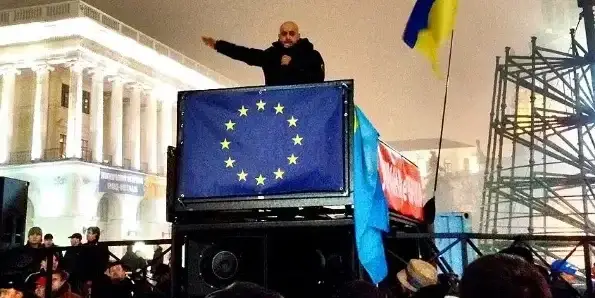
E – The Maidan protest movement kicked of that night, November 21st after Ukrainian activist Mustafa Nayyem, the co finder of the USAID and George Soros– backed Hromadske TV announced the onset of protest. On November 24, the anniversary of the Orange Revolution, opposition leaders, Vitali Kiltshko, Arseny Yatseniuk and Oleh Tyahnybok jointly coordinated a pro-EU march, which successes in bringing tens of thousands out to the Maidan encampment.
Maidan events chronology:
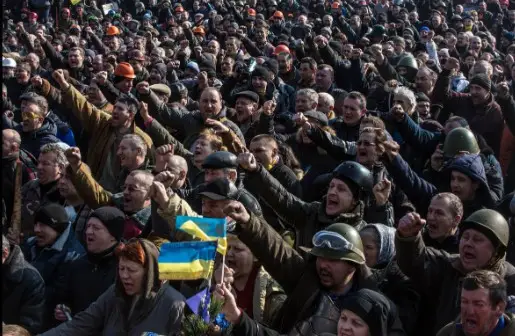
On November 24th, first clashes began. Five days after protest began ; groups including Patriot of Ukraine, Stephan Bandera’s Trident, the Ukrainian National Assembly- Ukrainian People’s Self Defense /UNA-UNSO/ and White Hummer joined create forces to Right Sector.
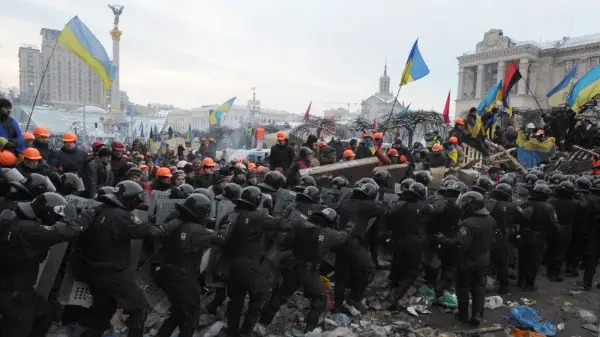
On November 30th, Berkut national police used batons, tear gas, and stun grenades’ to clear Independence Square. More demonstrators showed up, also ambassadors from EU countries notably Poland, Netherlands, Czech Republic, Sweden, and Finland joined demonstration, clearly on orders from their capitals.
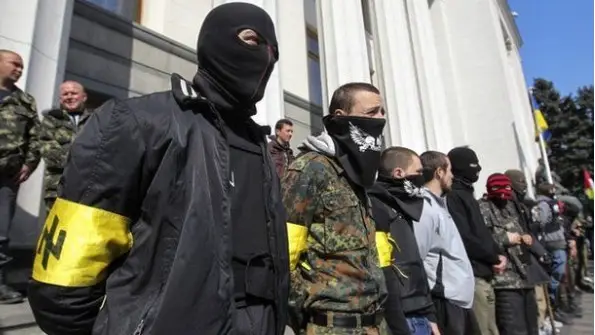
On December 1st, protesters smashed the windows of the city council building and took it over along with Trade Union House. Right Sector and their allies attacked police with hummers, bricks and Molotov cocktails. Approximately 100 officers were wounded along with 50 protesters. The Svoboda Party’s Oleh Tyahnybok called for general strike and “social and national revolution”.
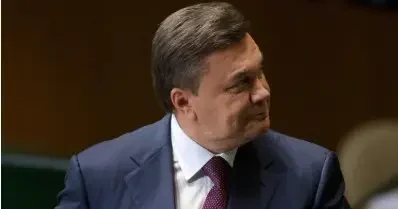
On December 2nd, police withdrew and next day Yanukovych survived vote confidence in Rada.
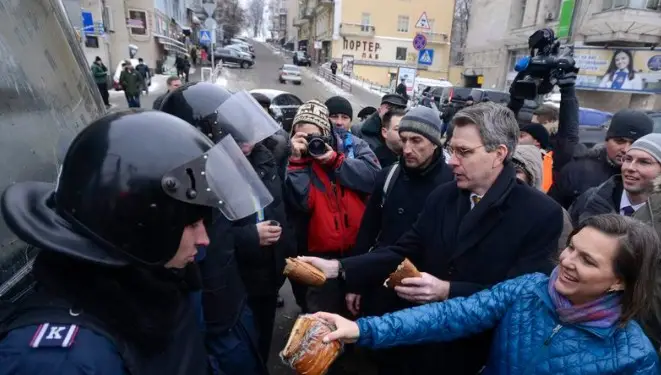
On December 10th high profiles U.S. figure Victoria Nuland went to Kiev to meet with protest leaders and show her support. U.S. Senators McCain and Chris Murphy stood on stage with Oleh Tyahnybok of Svoboda and Arseniy Yatseniuk of Julia Timoshenko’s Fatherland Party, and announced that the U.S. government supported their cause.
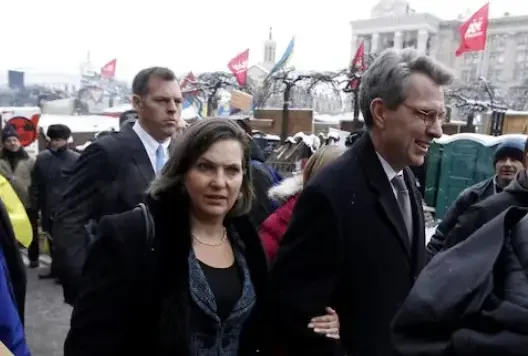
On February 7th, someone leaked an intercepted phone call between Nuland and U.S. Ambassador Pyatt. They were simply caught red-handed openly discussing which major protest leaders would fill what positions in Ukraine’s new government. Us Maidan protest progressed, the Right Sector sized dozen of local and regional governments buildings across western and central Ukraine to help success of the revolution.
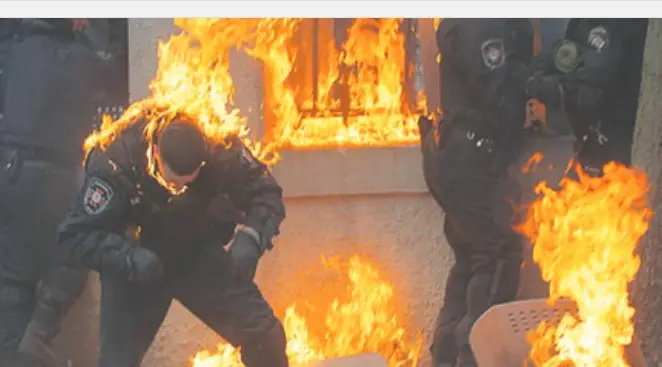
On February 18th, the Social-National Assembly /SNA/ attempted to storm the building of the parliament, the Supreme Rada. They also set fire to the Party of Region headquarters in Kiev, blocking the exits, killing one worker and seven policemen. That night the Berkuit raided Right Sector headquarters, where they discovered a stash of weapons, and riot police stormed the Maidan.
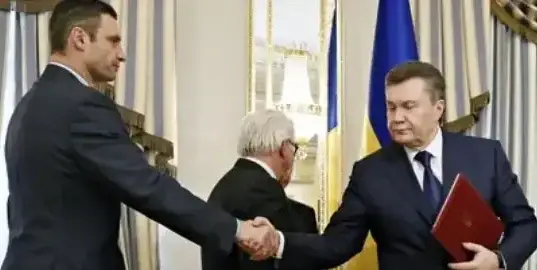
On February 19th, the protest leaders: Klitshko, Tyahnybok and Yatseniuk , signed a joint statement with Yanukovych calling for the truce.
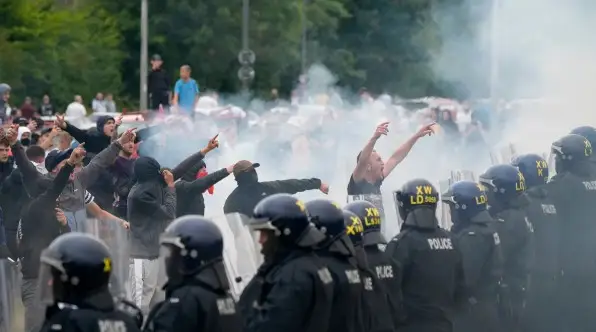
On February 20th, protesters clashed with the security forces combined of Interior Ministry Troops, the Berkuit and Riot Police, who tried to force the crowd away from the government buildings. Hidden snipers opened fire on police who then fired back into the crowd. Finally 102 protesters and 13 police officers were killed. The U.S. government and allied media claimed the shooting was responsibility of Yanukovytch. But from the very beginning, many witnesses reported that snippers who fired form the Conservatory and Hotel Ukraine were part of the revolution, shooting people from both sides in order to heighten the crisis.
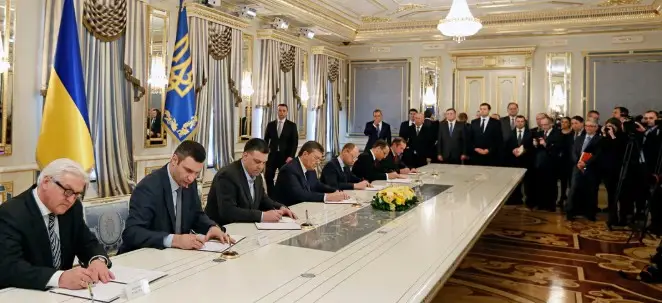
After the massacre the EU represented by the French, German and Poles, as well as the Americans, insisted that Yanukovych sign a new agreement with protesters. In it the president agreed to revert to the old constitution of 2004, and the Rada did so the next afternoon. The deal demanded that the opposition be brought into the government to work together on a package of constitutional reforms. Yanukovych also agreed to hold new election by December and pool the police back from their postures if the protesters would withdraw from occupied buildings and surrender their illegal weapons.
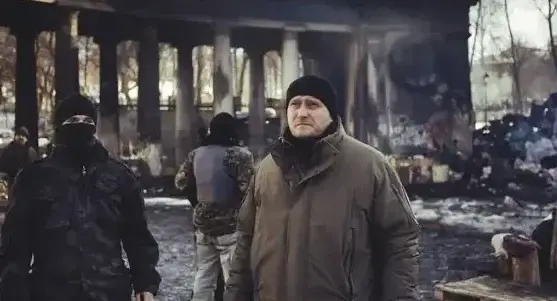
The self-appointed protest leaders denounced the deal as: “the agreements that were reached do not correspond to out aspirations. Right sector will not lay down arms of lift the blockade of single administrative building until our main demand is met- the Yanukovych resignation.” The Right Sector leader Yarosh vowed to lead an armed attack if president Yanukovych did not announce his resignation by 10 a.m. on Saturday.
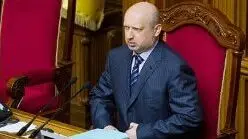
Finally Yanukovych was left almost entirely without security, while the Maidan camp remained intact and had shown that it could shoot, and forced Yanukovych to flee to eastern Ukrainian city of Kharkov and latter took refuge in the Canadian Embassy and finally in Russia. On February 21st, the Head of Security Service of Ukraine Alexander Valentinovych Turchinov took a duty as a Acting President of Ukraine.
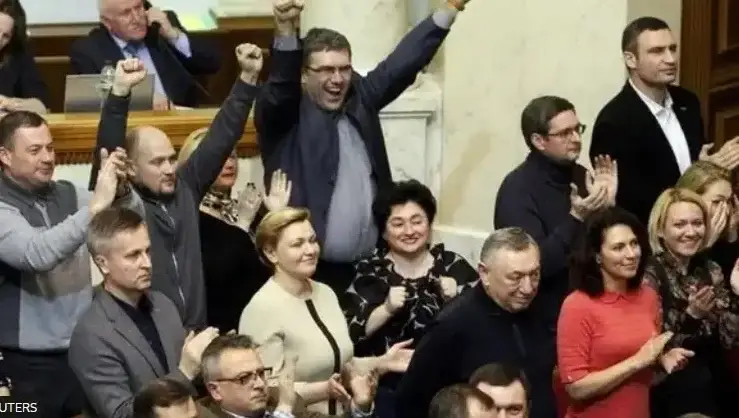
On February 22nd, the Rada voted to impeach Yanukovych, beside according to the law this was unconstitutional and illegitimate. After Yanukovych had initially returned to the 1996 constitution, but latter agreed to revert to the one ratified in 2004, both documents allowed impeachment only if the president “committed treason or other crime,” and required a three-fourths supermajority. They were 10 votes short. Beside that Rada proceeded to eliminate Yanukovych and new government was formed. The new government in Kiev was pro-western and anti-Russian to the core, and contained four high-ranking members who could legitimately be labeled neofascists.
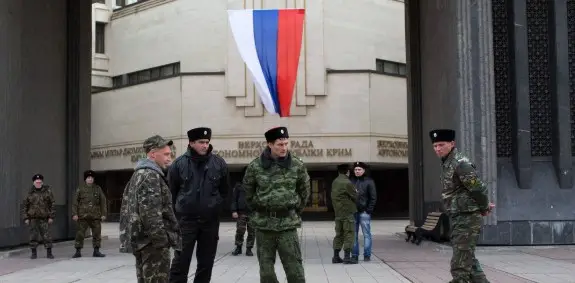
Russia correctly perceived that USA was deeply involved in laying foundation for the coup, and out of well-founded concern that the post-coup government might try to block Russia’s access to use of its warm-water naval base in Sevastopol Crimea, to which Russia had previously negotiated the lease agreement, so Russia annexed Crimea.
4 – Led the Ukrainian leadership to adopt an uncompromising stance toward Russia, by installed right-wing nationalists in power, started the war in the east and developing Ukrainian territory as a theatre of potential military operations against Russia, and as a result putting Ukraine in the path of Russian military blowback.
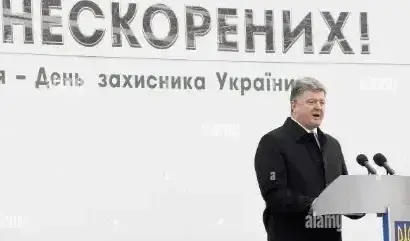
A – After the 2014 coup, the new Ukrainian president elected on May 25th, Petro Poroshenko, decreed October 14th, the anniversary of the funding of the UPA, to be “Defender of Ukraine Day”. The coup government soon banned any media that cast Russian-Ukrainian relation in positive light, including Russian movies, Russian language newspapers, and Russian songs on radio. The next year, the new Rada, led by the Nazis, passed “de-communization laws” that prohibited criticism of fascists in Ukrainian history. The east Ukraine region, heavily populated by Russian-origin and Russian speaking Ukrainian people didn’t accepted the new Kiev regime and started rebellion to protect their rights, national language, and culture.
B – On February 21-22nd in Kharkov, regional governors and mayors passed a resolution saying they rejected the new Rada and asked oblast and local governments to assume all authority in Kharkov, Donetsk, Luhansk, and Dnipropetrovsk and Crimea. they also recalled their members of the Rada in protest and demanded a broad decentralization of power. On March 1st, in Kharkov, a crowd stormed the regional state administration building, and clash whit pro-Maidan group that had attempted to occupy the first floor. On March 5th, demonstrators in Donetsk, seized the administrative building and announced that they refuse to recognize the legitimacy of the new regime in Kiev.
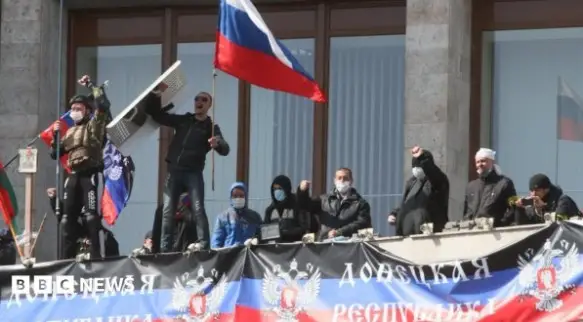
C – On April 6th, the protesters declared the “Donetsk People’s Republic” and demanded that the legislative assembly schedule a referendum on autonomous status. When assembly refuse, they formed their own, and declared independence on the April 7th.
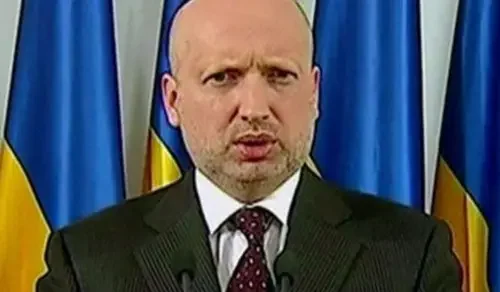
D – On April 8th, President Turchynov and his neo-Nazi cabinet publicly threatened to lunch an ” anti-terrorist operation” against the dissidents “taking up arms” against Kiev, even though no one had yet, and on April 15th, the operation started. Next morning, Ministry of Internal Affairs chief Arsen Avakov announced that he was sending forces to clear-out the occupied area deploying 700 solders, 20 armored personnel carriers and four helicopters to attack the rebels in Slavyansk. The Ukrainian army repeatedly attacked civilian areas under rebel control with airstrikes, heavy artillery and cluster bombs. Obama administration publicly disapproved this operation.
E – The reaction to events in Donbas was very drastic. Like Yanukovych’s various attempts to violently clear the Maidan, the effort backfired and only more people in the region stay away from western Ukraine and show sympathy toward Russia.
F – On September 5th Poroshenko’s team, along with representatives from Germany, France and Russia, met in the capital of Belarus and signed out the agreement what become known as the Minsk 1. It included a ceasefire, prisoner exchange, withdrawal of heavy military equipment and fighters from eastern Ukraine, also promises by Kiev to reconstruction program for the Donbas, and a new “special status” of autonomy and local elections. All to be monitored by the OSCE /Organization for Security and Co-Operation in Europe/. The deal did not have its intended effect and war continued.
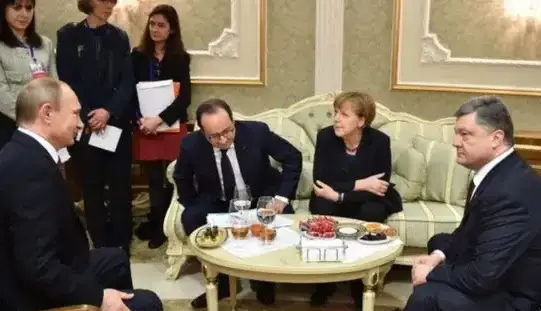
G – On February 12th 2015, German Chancellor Angela Merkel and French President Francois Holland returned to Belarus to sign the Minsk 2 agreement. While largely rehashing the military situation, the deal elaborated on Donetsk and Luhansk’s special status, also demanded the Ukrainian constitution be rewritten to establish stronger federalism for the region and protection for the Russian language. Kiev never lived up to it. The Rada quickly passed a law which made the Minsk 2 impossible to implement, by requiring Russia to transfer control over Ukraine’s eastern boarder before new elections were held, contrary to the terms of the agreement they had signed. Later during the interview for “Die Zeit”, Angela Merkel publicly admitted that Minsk Agreement was signed with no intentions to implement, but to buy more time for Ukraine.
H – By the time of the Russian invasion of February 22nd, since 2014, the Office of the United Nation High Commissioner for Human Rights had tabulated the casualties in eastern part of Ukraine as : 14,200 to 14,400 killed, at least 3,404 civilians, estimated 4,400 Ukrainian forces, and estimated 6,500 members of armed groups and 37,000 to 39,000 injured 7,000 to 9,000 civilians, 13,800 to 14,200 Ukrainian forces and 15,800 to 16,200 members of armed groups.
5 – Conducted countless NATO military exercises near Russia’s border. These have included for example, live-fire rocket exercises whose was to simulate attacks on air-defense systems inside Russia.
A – After Russia took control of Crimea; the U.S. began a massive program of military’s aid to Ukraine. According to the U.S. Congressional Research Service, a partial accounting since 2014 to 2022, military aid initiated to over four billion dollars, “to improve interoperability with NATO”, regardless of the fact that Ukraine is not in NATO.
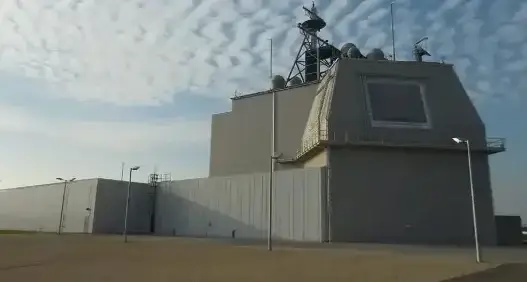
B – In 2016, acting on the prior American abrogation of the anti-ballistic- missile /ABM/ treaty, the U.S. put into operation an ABM site in Romania. The ABM system uses Mark-41 “Aegis” missiles launchers which can accommodate not just ABM’s but also-crucially-nuclear tipped offensive weapons like the Tomahawk cruise missile with range of 1,500 miles, which can strike Moscow and other targets deep inside Russia, and can carry hydrogen bomb warheads with selectable yields up to 150 kilotons. A similar Aegis site was set under construction in Poland. Aegis launchers at each site can accommodate 24 missiles, creating potential for 48 Tomahawk cruise missile to lunch at Russia from relatively close range.
C – In 2017, the Trump administration raises the armament and began to sell offensive weapons to Ukraine.
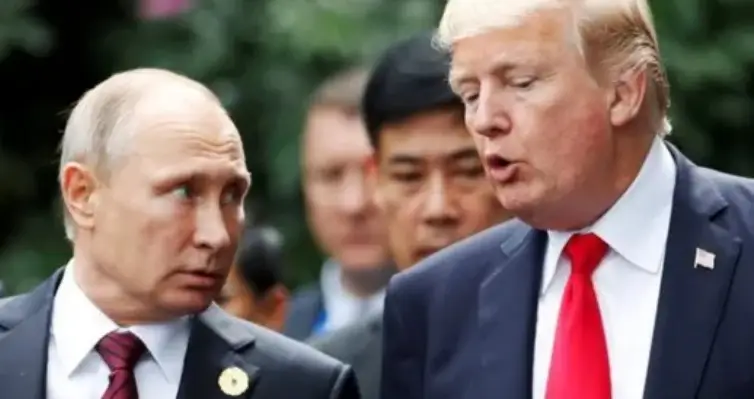
D – In 2019, the U.S. unilaterally withdrew from 1987 treaty on intermediate-range nuclear weapons.
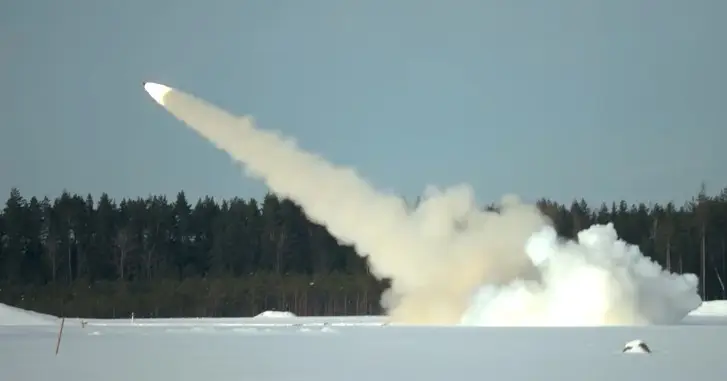
E – In 2020, NATO concluded a live- fire training exercise inside Estonia, 70 miles from Russia’s border using tactical missiles with range up to 185 miles. In 2021, again in Estonia, NATO fired 24 rackets to simulate an attack on air defense targets inside Russia.
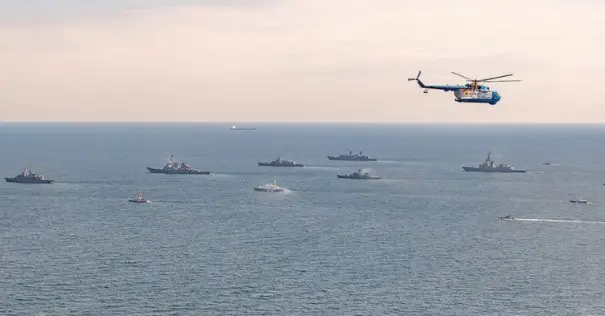
F – In July 2021, Ukraine and U.S. co-hosted a major naval exercise in Black Sea involving navies from 32 countries. “Sea Breeze” almost provoked Russia to fire at British destroyer that deliberately entered what Russia considers its territorial waters.
G – In August 2021, the U.S. Secretary of Defense and the Ukrainian Minister of Defense signed U.S.- Ukraine Strategic Defense Framework, which translates the NATO pronouncement into bilateral policy decision to change the military facts on the ground starting immediately, regardless whether Ukraine is a NATO member or not.
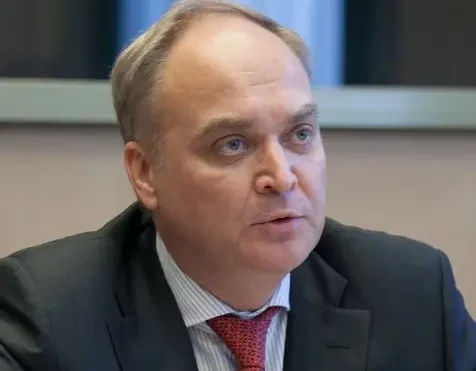
H – On December 2021, the Russian ambassador to the U.S. Anatoly Antonov, noted that NATO was carrying out roughly 40 large training exercises annually near Russia. He warned: “The situation is extremely dangerous”.
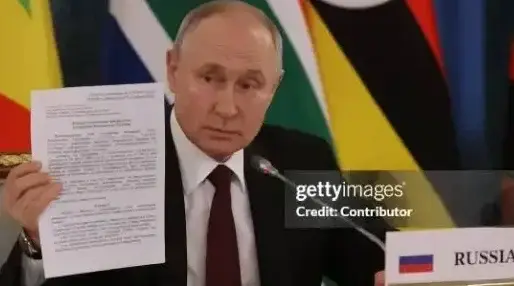
Unsurprisingly, Moscow found this evolving situation intolerable and began mobilizing its army on Ukraine’s boarder about 100,000 to 190,000 troops, to signal its resolve to Washington. There is evidence that Russians tried to find diplomatic solution before war starts. On October 17th 2021, President Putin send letters to President Biden and NATO chief Janes Stoltenberg proposing solution to the crisis with written guaranties that Ukraine not join the NATO, no offensive weapons will be stationed near Russian boarders and NATO troops and equipment moved to Eastern Europe after 1997 will be move back to Western Europe. USA and their alliances refuse negotiate with Russia and appears they were not interested in avoiding the war. The negotiations failed, as U.S. Secretary of State Mr. Blinken made clear: “There is no change. There will be no change.” Considering the fact that Russian army was not enough to take over Ukraine and the fact that more countries outside Ukraine was a NATO members which almost certainly means war with USA and NATO, there is not a scintilla of evidence that President Putin was contemplating conquering any other countries in Eastern Europe of further to West. Russia had not enough troops to conquer Ukraine. One of the Ukrainian general Sierski, estimated that Russia put on 100,000 troops. With that number 100,000 to 190,000 troops, against approximately 600,000 Ukrainian troops, there are no way you could conquer, occupy and absorb Ukraine to Russia. When Germany invaded western part of Poland in 1939, they used one and half millions troops. Ukraine is geographically three times more than western port of Poland in 1939, and almost twice more populated than Poland in 1939. If we’re accept general Sierski estimate there is only one fifteenth of troops Russia used compere to Germany campaign in September 1939. Also Russians was aware that western countries arms, trained and supported Ukrainian Army.
By invading Ukraine, President Putin goal was to quickly achieve limited territory gains and force Ukraine to bargaining table to negotiate their neutrality and to keep NATO out of Russian border. Immediately after the war began, Russia start negotiations with Ukraine to end the war. The negotiations began in Belarus just four days after invasion. Available evidence indicates that Russians were negotiating seriously and was not interesting in absorbing Ukrainian territory. The negotiations ended when Ukrainians with prodding from Great Brittan and USA, walked away from negotiating table.
Another chance to end the war appeared shortly after on spring 2022, and the deal was almost reached during negotiations between Moscow and Kiev known as an “Istanbul Peace Deal” . Ukraine presented the “Istanbul Communique” which was 10 point plan proposed in writing, and pre-agreed by the parties as the basis for negotiated settlement. It included Ukraine’s proposal of “proclaiming itself a neutral state, promising to remain nonaligned with any blocks and refrain from developing nuclear weapons-in exchange for international legal quarantines which would not extend to Crimea, Sevastopol, or certain areas from Donbas. Also Ukraine vows not to join any military coalition or host any foreign military bases or troop contingents”. In Exchange, the guarantors confirm their intention to promote Ukraine’s membership in the European Union. The proposed plan also specified that the parties desire to resolve issues related to Crimea and Sevastopol shall be committed to bilateral negotiations between Ukraine and Russia for the period of 15 years. The treaty was to “provisionally apply from the date it is signed by Ukraine and all or most guarantor-states, “and it was enter into force after Ukraine’s permanently neutral status is approved in a national referendum, the introduction of the appropriate amendments in Ukraine constitution, and ratification in the parliament of Ukraine and the guarantor-states. The final Ukraine proposal stated that “The parties consider it possible to hold a meeting between presidents of Ukraine and Russia for the purpose of signing a treaty and /or adopting political decisions regarding other remaining unresolved issues.” President Zelensky abandoned the peace deal and walk away unilaterally from the table right after visit by the British Prime Minister Boris Johnson in Kiev on April 9th 2022.
Conclusion
The war on Ukraine was mostly predictable and avoidable. From today’s perspective after few failure attempts to end the war, there is absolutely clear that this crisis is a part of long planed global agenda, executed by U.S. and NATO alliances, but using Ukrainian army. Sequence of events for the last three decades which include legislative alterations coordinated timely to adopt new reality, mostly in Poland as direct neighbor and important strategic partner of Ukraine , only proves determination of the architects of this project to successfully execute detailed blueprint. This is a proxy war, using and sacrificing Ukraine to make Russia weaker for future break-up and take over. Some U.S. senators loudly declare that supporting Ukraine is the best and wonderful expenditure of American money because no Americans are dying. Since the last negotiation attempts, about million Ukrainians died or got severely wounded. By pushing Ukraine to continue fight, there is serious risk that this conflict may expend over to neighboring countries and escalate to uncontrolled stage. Ukrainian people were betrayed by their own political elites. Corrupted politicians are not allowed to get any peace agreement as long as their handlers acting from behind the scene let them do it, previously achieving theirs strategic goals. They force Ukraine to keep fighting while promising victory, endless military and financial assistance and also security guaranties in the future. If those securities are in the hands of those guarantors, so God help us all.
Jacek Gornicki